efko logo

Eferdinger delicacies

UPPER AUSTRIA'S
MOST IMPORTANT VEGETABLE CULTIVATION REGION

After Marchfeld, the Eferdinger Becken is the second most important vegetable cultivation region in Austria. It is one of the warmest regions of Upper Austria. The average annual temperature is 8.5°C, with a comparatively high number of days over 5°C.

Sandy and fertile earth and the favourable climate in the region ensure optimal conditions for cultivating field vegetables. More than 70 types of vegetables are cultivated, especially cabbages, salads, cucumbers and root vegetables. The Upper Austrian vegetable farmers are market leaders in Austria for cultivating cabbage, broccoli, garden lettuce and iceberg lettuce, field cucumbers and pickle cucumbers and beetroot.

Here in the Eferdinger Becken, where agriculture has been deeply rooted for generations, cultivation is defined by tradition, the soil and knowledge. The raw goods are the foundation for taste and quality. They are cultivated by the farmers with experience and care, harvested and delivered directly to efko using short transport routes.

At efko, we take care of the careful further processing and refine the raw goods into products that live up to their promise. This regional cooperation, short transport routes and responsible handling are what ensures the quality that distinguishes our products. If you buy an efko product you can be sure you are buying the best quality. We are dedicated to this promise day in day out!

Landschaft

Gherkins - from the field into the jar

It takes around 40 days from cultivating the seedlings to harvesting. First the soil is prepared. Then drip irrigation is laid and the field is covered with mulch foil. Holes are poked into the foil at regular intervals. The seedlings are laid into them. The plants require a lot of water. The drip irrigation ensures a targeted supply and is also resource-efficient.

After the plants start blossoming, the first little cucumbers appear three to five days later. As the cucumbers grow up to 3 centimetres per day, they are big enough to harvest after two more days. Cucumber plants blossom continuously. New cucumbers develop constantly that can be harvested every third day from the middle of June to the beginning of September.

A special cucumber harvester is dragged over the field by a tractor for harvesting. Every harvester has people lying on it who pick the cucumbers by hand. When the trailer is full, the raw goods are delivered directly to efko for further processing. Due to this rapid process, the cucumbers stay particularly crunchy.

The freshly delivered cucumbers are tipped out of the trailer, weighed and sorted according to size. Then they are washed and put on a conveyor belt for sorting. Damaged cucumbers are rejected directly. When they are ready for filling, they are filled into jars and pickling vinegar is poured over them. For preservation, the sealed gherkin jars are pasteurised. That means heating them to at least 78 degrees. Then they are cooled to 28 degrees and labelled. A scanner checks each jar for contamination before they are stacked on pallets at the warehouse and await delivery.

Freshly harvested cucumbers cannot be stored. This is what makes the processing of pickled gherkins so challenging.  All the gherkins have to be processed and filled into jars within the short harvesting period of just a few weeks.

efko

+

years

of Eferdinger quality.

+

farmers

as regional partners.

employees

at the efko Group.

+

exquisite products

efko
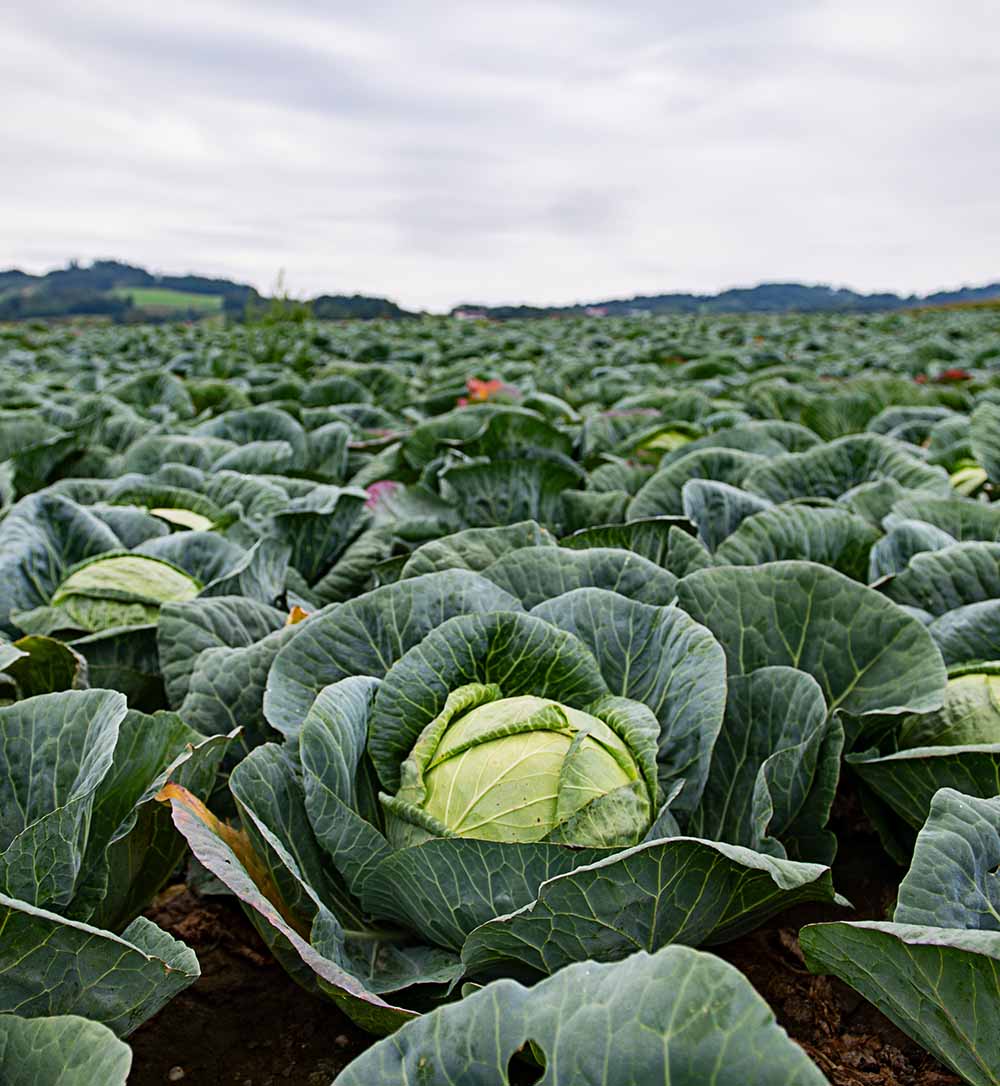
Krautfeld aus der Eferdinger Gemüseregion

White cabbage

White cabbage is a central raw material for many of our products. The planting takes place from mid-April to the end of May, depending on the weather. Around 25,000 to 30,000 plants are laid per hectare, which represents around 2.5 to 3 plants per square metre. Our white cabbage originates in Austria and largely from the immediate vicinity, ensuring short transport routes and fresh raw goods.

Harvesting starts from the end of July or beginning of August and lasts into December. A head of cabbage can reach a weight of up to five or six kilograms. The white cabbage is harvested as soon as the heads have reached their typical light colour.

A special cabbage harvester is used for harvesting. It is dragged across the field by a powerful tractor, cutting the cabbage heads off close to the ground and collecting them directly. Then the cabbage heads are loaded onto trailers and transported to the sauerkraut hall. The cabbage is finely chopped there and filled into sauerkraut silos after adding salt. After enclosed fermentation, the sauerkraut is continuously delivered to efko and processed further into the popular sauerkraut specialities.

Sauerkraut is among the oldest and most valuable foods in Austrian cuisine. Through the natural malolactic fermentation, the freshly grated white cabbage is refined and obtains its typical delicately tart taste. This traditional method is not only particularly gentle on the cabbage but also makes it rich in valuable substances such as vitamins, minerals and natural lactic acid bacteria.

Fermented foods are currently a big trend,as they offer a wide range of tastes and can be easily integrated into modern nutritional styles. Sauerkraut therefore brings together culinary traditions and current food trends and is an integral part of a conscientious and varied cuisine.

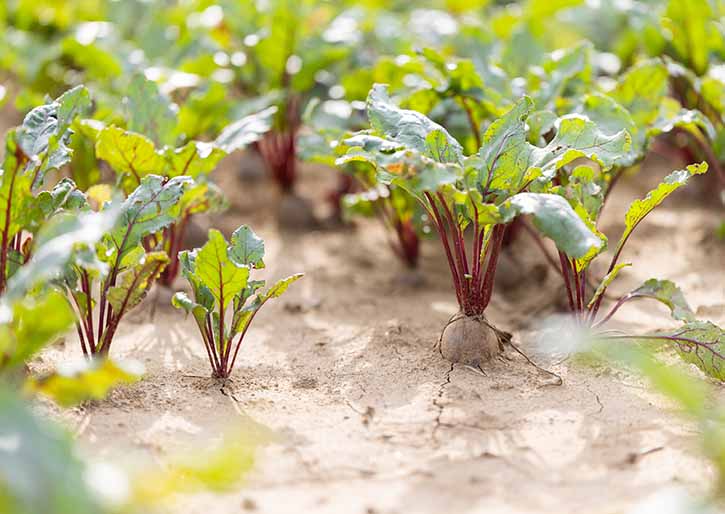
Beetroot

The sowing of beetroot is from the end of April to the end of May, depending on the weather. It is harvested in the autumn, usually from mid-September to the end of October. The majority of the beetroot originates not only in Austria but directly from the immediate vicinity around efko. This allows long transport routes to be avoided and benefits the preservation of the freshness of the raw goods.

Harvesting is by machine in two coordinated work steps. First a special machine, a so-called chaff cutter, removes the foliage and at the same time pulls the beetroots carefully out of the ground. In the next step, the grubbing machine takes over the harvest. It collects the beetroots and stores it in an integrated bunker that holds up to five tons. As soon as it is full, the beetroots are loaded onto big trailers and taken to frost-proof storage.

From there, the beetroots are continuously supplied to efko. The processing takes place from mid-September to the beginning of March. During this time, the beetroots are washed, peeled, processed further according to various recipes and then filled into jars. Then the products are made non-perishable through careful heating, to preserve their quality and taste.

Rote Rüben aus der Eferdinger Gemüseregion

Our central topics for the future at efko are securing domestic agriculture and supplying people with local fruit and vegetables. Bringing sustainability and innovation together is a focal point of our decisions and investments.

Thomas Krahofer
efko management

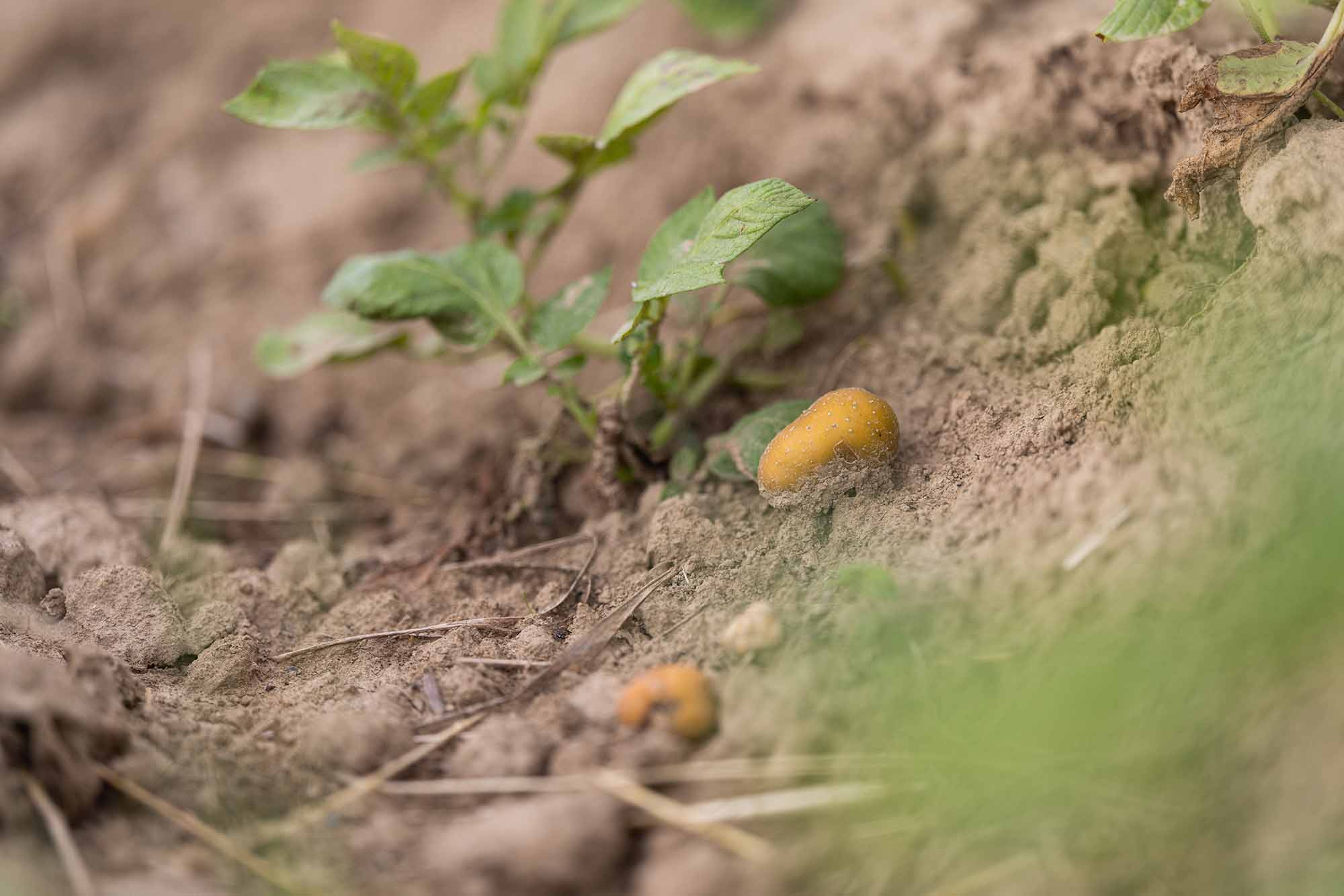
Kartoffelfeld aus der Eferdinger Gemüseregion

Potatoes

Potatoes belong to the family of solanums and are astoundingly varied. There are several thousand types around the world. For our potato salads, we exclusively use waxy potatoes as they maintain their firmness when boiled due to their low starch content and offer the ideal basis for consistent quality.

Depending on the soil temperature, the potatoes are planted from mid-March to the end of May. Harvesting starts in June and lasts into the autumn. Special harvesting machines are used that release the potatoes out of the ground and separate out earth, weeds and stones. After harvesting, they are stored in a cool place and delivered fresh to efko at regular intervals, where they are processed further.

During production, the potatoes are first thoroughly washed, peeled, cut and gently cooked until they are soft using steam. This optimally preserves their consistency and taste. Then they are processed further according to the recipe and filled into jars. Some products are also preserved through pasteurisation.

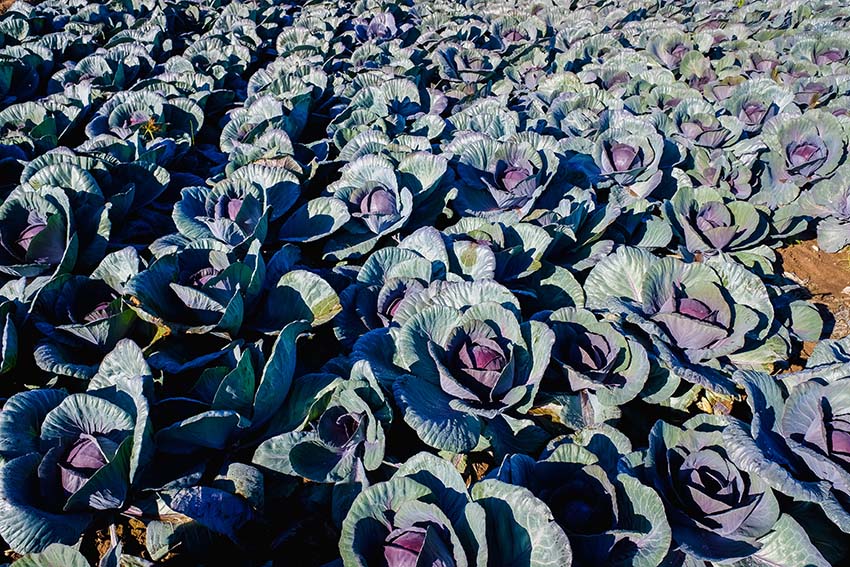
Red cabbage

The planting of our red cabbage from Austria takes place from the end of April to the end of May, depending on the weather. Around 28,000 plants are laid per hectare, corresponding to around 28 plants per 10 square metres. The cabbage then needs around 130 to 140 days to be fully ripe.

Harvesting starts in September, lasts until mid-November and uses a machine, like for white cabbage. After harvesting, the red cabbage is stored. This preserves its freshness and quality for a long period of time. It is continuously delivered to efko for processing. The processing takes place not only during the harvesting period but into the months of February and March.

Rotkraut

NOCH FRAGEN?

Für Fragen und Anregungen stehen wir sehr gerne zur Verfügung.

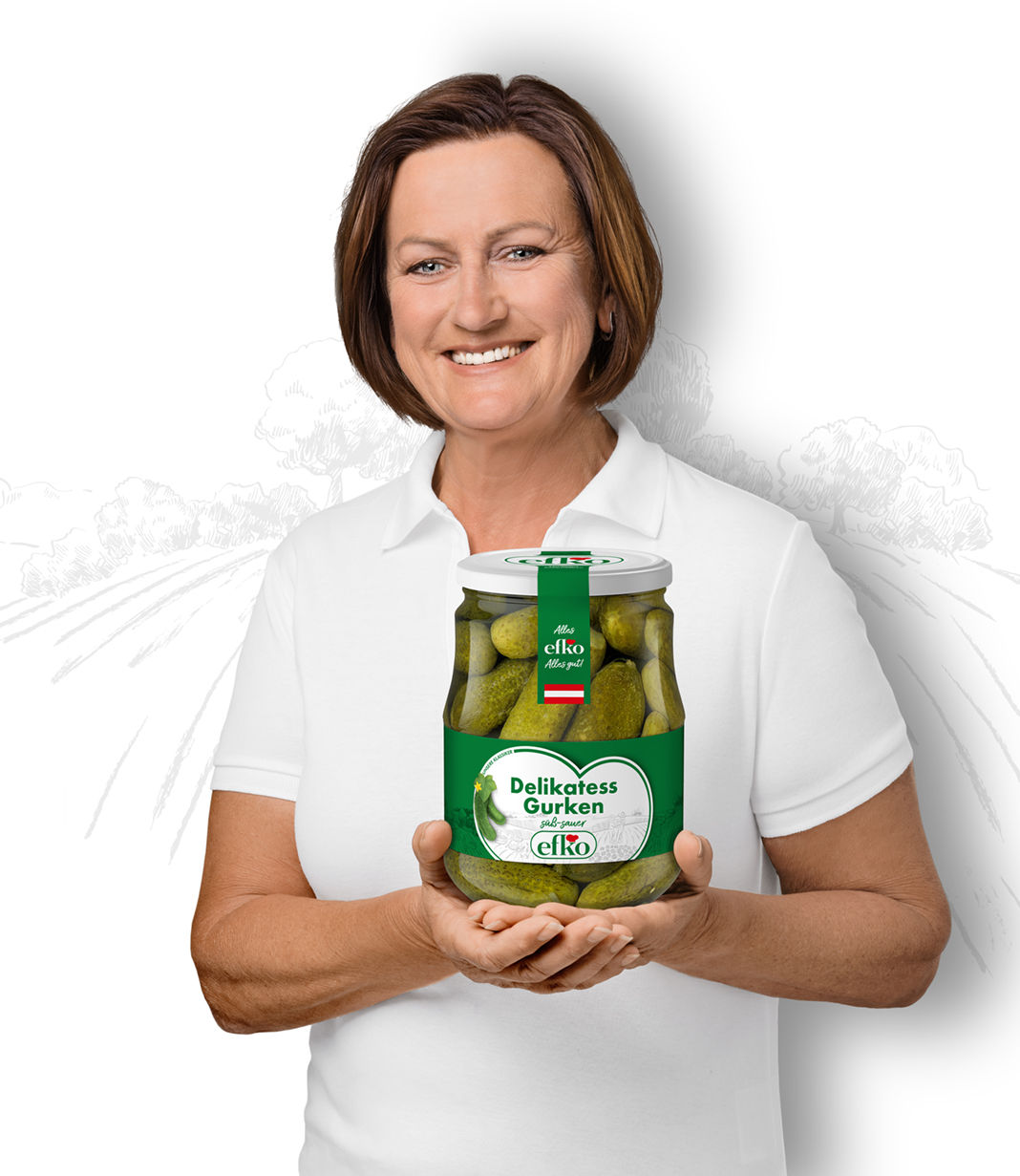
Delikatess Gurken von efko. Eine Frau präsentiert ein efko Gurkenglas.
efko logo

Only efko will do!

Anyone who buys a product from efko can be sure that they are buying the best quality. We meet this requirement anew every day!

Since 1941

Products
Company
Contact
© 2026 efko
|

Digital agency gruppe *himmelreich

efko
Privacy Overview

This website uses cookies so that we can provide you with the best user experience possible. Cookie information is stored in your browser and performs functions such as recognising you when you return to our website and helping our team to understand which sections of the website you find most interesting and useful.